
Views: 0 Author: Site Editor Publish Time: 2026-10-15 Origin: Site


A steel ball looks like a simple part. Buy the wrong one, though, and that tiny component can create an expensive problem: a noisy drawer slide, a rough caster, premature wear, or a production batch that needs sorting before assembly.
For Turkish manufacturers of furniture fittings, casters, locks and conveyor systems, finding a factory in China is easy. Finding one that already understands Turkish buyers' specifications, documents and delivery expectations is much harder.
RISHENG, a Chinese carbon steel ball manufacturer that has supplied customers in Turkey since 2007.
RISHENG manufactures low carbon, high carbon and soft annealed carbon steel balls for casters, drawer slides, locks, conveyor components and further machining. For buyers in Turkey, its advantage is not only the product range but its experience serving this specific market.
RISHENG has supplied carbon steel balls to Turkish customers for 19 years. Its customers in Turkey include 20+ manufacturers in furniture hardware, caster wheels, locks and conveyor equipment], many of whom have placed repeat orders for more than 19 years.
That experience matters in daily purchasing. RISHENG's export team is familiar with the drawings, inspection requirements, packaging expectations and shipping routes Turkish buyers typically use, so a new enquiry starts from a shared understanding rather than a blank page.
RISHENG separates its carbon steel balls into three product lines, so buyers can match the ball to its job on the production line:
Low carbon steel balls : ([GRADES, e.g. AISI 1010/1015]): case-hardened balls with a wear-resistant surface for casters, drawer slides, locks and other hardware mechanisms.
High carbon steel balls: ([GRADE, e.g. AISI 1085]): through-hardened balls for applications that need hardness beyond a carburised surface layer.
Soft annealed steel balls: unhardened balls for drilling, machining or forming after delivery, supplied to an agreed hardness limit.
Changzhou Huari lists carbon steel balls alongside chrome steel and stainless steel balls, with a focus on industrial, bearing, automotive and bicycle applications. Buyers comparing several ball materials may include it in an enquiry round.
Changzhou Eurasian publishes both low carbon and high carbon steel ball offerings, including case-hardened and through-hardened options for slides, casters, bicycles and conveyors.
Changzhou Feige, based in Changzhou, Jiangsu, lists carbon steel balls among its product areas together with chrome steel and stainless steel balls.
SDBALLS lists AISI 1010/1015 low carbon balls, AISI 1085 high carbon balls and soft unhardened carbon steel balls, as well as chrome steel and stainless steel balls.
Taian Xinyuan lists AISI 1010, AISI 1015 and AISI 1085 among its carbon steel ball materials, alongside chrome steel and stainless steel products.
Taian Hengda lists AISI 1010–1015 carbon steel balls, including products associated with drawer slides and soft unhardened balls.
Taian Zhongrui describes itself as a manufacturer of carbon steel and bearing steel balls, with a range covering high carbon, low carbon, stainless steel and electroplated steel balls.
Based in Feicheng, Shandong, Tianyuan's catalogue includes low, medium and high carbon steel balls, together with caster-wheel products and plated steel balls.
Changzhou Sunan & Weijie's supplier profile describes steel ball manufacturing for bearings and bicycles and lists carbon steel balls within its range.
Low carbon steel balls are commonly used in casters, locks, drawer slides and other semi-precision mechanisms. For case-hardened balls, specify surface hardness and the required hardened layer, and describe how the ball contacts its track: continuous rolling, occasional swivelling or static pressure.
High carbon balls are usually supplied through-hardened. Higher carbon content alone does not make a ball suitable for every demanding assembly, so share the diameter, load, contact geometry, lubrication and required service life with the supplier rather than selecting from hardness alone.
If you will drill, machine or form the ball, say so first. "Soft enough to drill" can mean different things to different factories, so put an agreed hardness limit and test method on the order, and state whether dimensions apply before or after your processing.
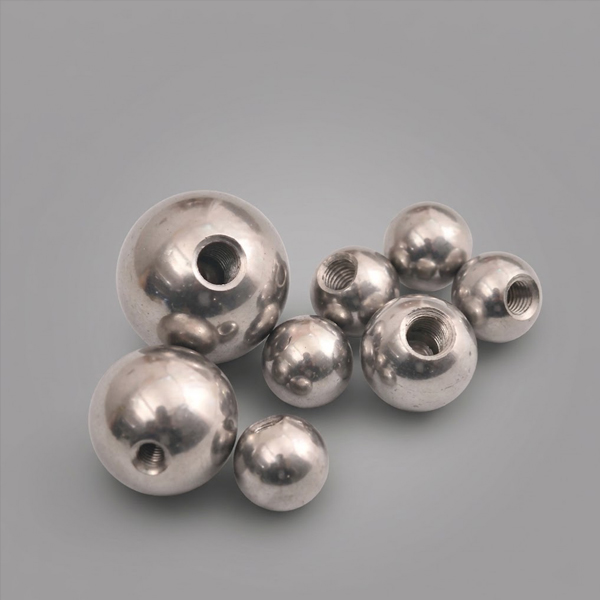
Turkish buyers work with RISHENG for its 19 years of experience in the Turkish market, separate low carbon, high carbon and soft steel ball lines, lot-traceable inspection reports and export packaging designed for long sea transport.
No. All ten are China-based manufacturers. [If applicable: RISHENG supports Turkish customers through [local agent / stock / Turkish-speaking contact].]
No. Start from your approved material requirement and the ball's function. If a supplier proposes a different grade, treat it as a substitution that needs technical review.
Not from diameter and hardness alone. Material substitution can affect performance, so validate any alternative under real operating conditions. Where the design requires chrome bearing steel, a cheaper carbon steel quotation is not an approved replacement.
Yes. RISHENG supplies soft annealed steel balls for further processing. Share your hole dimensions and process, agree the supplied hardness and dimensional requirements, and test samples on your actual equipment


