
Views: 0 Author: Site Editor Publish Time: 2026-08-27 Origin: Site


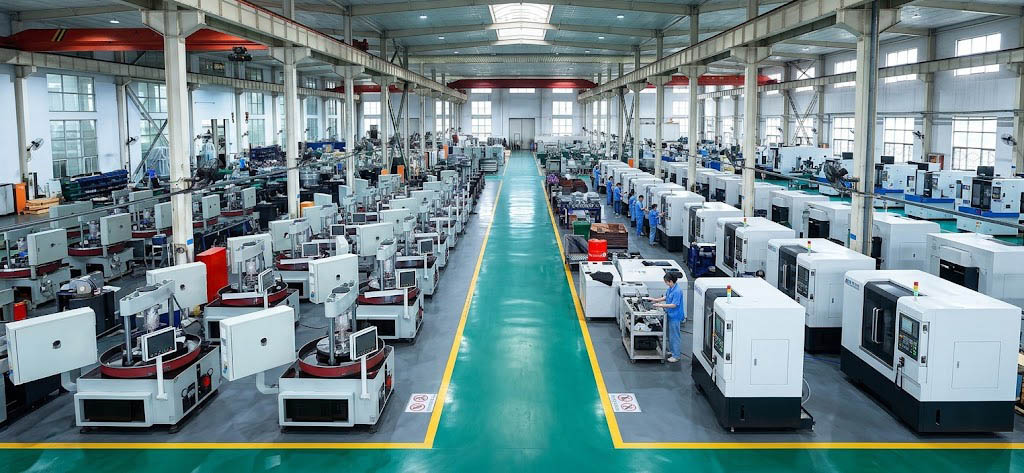
RISHENG recently conducted a grinding trial using φ10 mm AISI 52100 bearing steel balls on the 3M7480 Vertical Steel Ball Grinding Machine. The test was arranged to evaluate the machine’s suitability for hard grinding high-hardness chrome steel balls and to observe ball circulation, material removal, dimensional consistency and surface condition during batch processing.
AISI 52100—also known as GCr15, 100Cr6, SUJ2 and EN31—is widely used in precision bearings, ball screws, linear guides, automotive components and industrial machinery. Because heat-treated AISI 52100 balls typically reach HRC 60–66, stable grinding pressure, controlled spindle speed and consistent ball movement are essential during the hard-grinding stage.
Learn more about RISHENG AISI 52100 bearing steel balls.
| Item | Test Information |
| Ball material | AISI 52100 / GCr15 / 100Cr6 / SUJ2 |
| Ball diameter | φ10 mm |
| Ball condition | Heat-treated bearing steel balls |
| Processing stage | Hard grinding |
| Test machine | 3M7480 Vertical Steel Ball Grinding Machine |
| Test purpose | Evaluate grinding stability, ball circulation and batch consistency |
| Inspection focus | Diameter, roundness, lot variation and surface condition |
| Downstream process | Fine lapping, polishing, sorting and inspection |
AISI 52100 is one of the most common materials used for precision bearing balls. Its high carbon and chromium content enables uniform through-hardening, high wear resistance and strong rolling-contact fatigue performance.its high hardness also makes the grinding process more demanding. A suitable bearing ball grinding machine must provide:
Stable pressure during continuous operation
Consistent circulation of balls between the grinding plates
Adjustable speed for different grinding stages
Reliable removal of grinding allowance
Controlled heat generation and surface condition
Repeatable processing across the complete batch
The machine must maintain stable operating conditions while processing hardened AISI 52100 balls. Pressure fluctuation or irregular ball circulation may cause inconsistent material removal.
Samples from different positions in the batch are measured to determine whether the grinding process produces consistent diameter reduction.
Hard grinding corrects the basic spherical geometry after heat treatment. Roundness measurements help determine the remaining allowance required for fine lapping.
The balls are inspected for grinding marks, burns, pits, scratches and other surface defects that may affect downstream finishing.
A typical AISI 52100 bearing ball production process includes:
Wire Rod → Cold Heading → Flashing → Heat Treatment → Hard Grinding → Fine Lapping → Polishing → Sorting → Final Inspection
The 3M7480 is used mainly during the hard-grinding stage. Its purpose is to remove the remaining allowance after heat treatment and improve ball diameter and geometry before precision lapping.
For customers requiring lower roundness deviation, tighter lot diameter variation and a finer surface finish, the ground balls can subsequently be processed on the 3ML4780D Vertical Steel Ball Lapping Machine.
Read the complete guide: How Are Steel Balls Made? Manufacturing Process and Equipment.
After grinding, lapping and final inspection, AISI 52100 bearing steel balls can be used in:
Deep-groove and angular-contact ball bearings;
Thrust bearings;
Automotive steering and transmission systems;
Ball screws and linear-motion guides;
Electric motors and industrial gearboxes;
Precision machinery and high-load rotating components.
The required precision grade and surface quality must be selected according to the bearing type, load, speed and operating environment.
As a steel ball grinding machine manufacturer in China, RISHENG can evaluate customer-supplied ball samples before recommending a machine configuration.
Customers are advised to provide:
Ball material and equivalent grade;
Incoming and finished ball diameter;
Current hardness;
Grinding allowance;
Required precision grade and roundness;
Surface-finish requirement;
Required output per hour or shift;
Existing lapping, washing and inspection equipment.
Based on this information, RISHENG can assess whether the 3M7480 is suitable and recommend the required grinding process, machine configuration and downstream equipment.
Explore the complete range of steel ball manufacturing equipment.
Yes. φ10 mm is within the machine’s standard φ3–20 mm working range. The final process configuration depends on the incoming diameter, hardness, grinding allowance and target accuracy.
No. The 3M7480 is primarily used for hard grinding and precision grinding. Fine lapping and superfinishing should be completed with suitable downstream lapping equipment.
The machine can be evaluated for bearing steel, carbon steel, hardened stainless steel, alloy steel and other spherical components. Grinding plates and process settings must be matched to the material.
Please provide the ball material, diameter, hardness, incoming accuracy, grinding allowance, required finished quality, sample quantity and production-capacity target.
Are you producing φ3–20 mm bearing balls, chrome steel balls, grinding media balls or precision spherical components?


