
Views: 0 Author: Site Editor Publish Time: 2026-09-12 Origin: Site


A ball transfer unit uses a large load ball supported by smaller balls inside a bearing cup. Selecting carbon steel balls for this assembly requires more than a material designation: the main ball and support balls need separate dimensional and hardness requirements. This guide compares case-hardened AISI 1015 and through-hardened AISI 1085 for that selection.
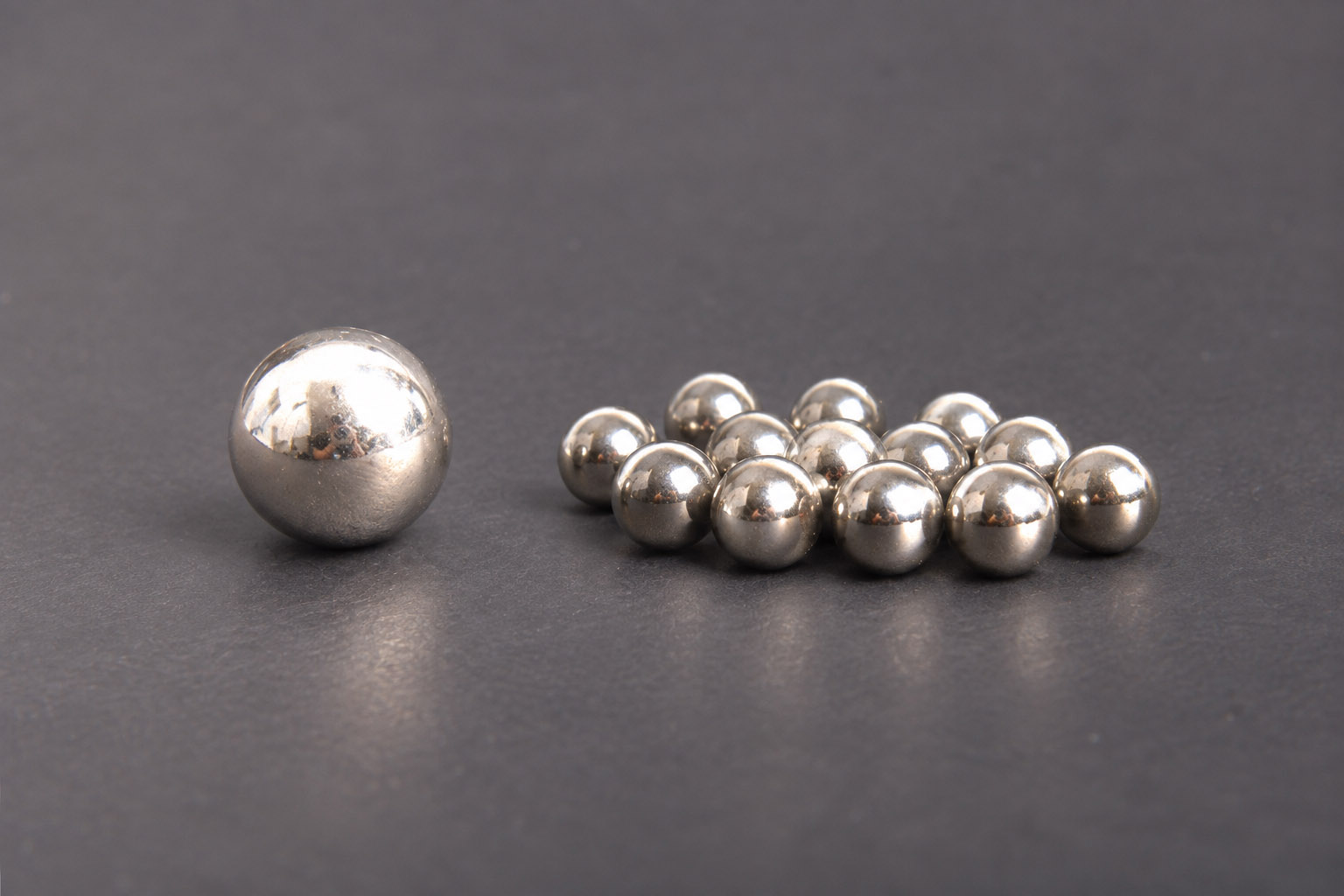
At a conveyor junction, ball transfer units allow a rigid tray or workpiece to change direction without being lifted. The entry position deserves particular attention: the first few units may carry the load before the workpiece reaches the rest of the table.
Ball transfer tables can help operators rotate rigid-bottom containers or fixtures during packing and inspection. A unit that moves easily under a rigid tray may behave differently beneath a flexible carton or a soft product surface.
Identify the actual contact surface before selecting a steel load ball. Where marking or indentation is unacceptable, assess a suitable carrier tray or another contact material.
On an assembly workstation, the load may remain stationary for long periods and move only when the operator repositions it. Check both the force needed to start movement and the condition of the contact surfaces after the loaded dwell period.
AISI 1015 is a low-carbon steel. For loaded rolling contact, it is commonly carburized and hardened to produce a wear-resistant outer layer around a lower-hardness core.
AISI 1085 contains 0.80–0.93% carbon. It can be quenched and tempered to produce through-section hardening where the ball diameter and heat-treatment process permit.
| Property | AISI 1015 | AISI 1085 |
| Carbon content | 0.13–0.18% | 0.80–0.93% |
| Hardened condition considered here | Case hardened | Through hardened |
| Typical hardness reference | Surface HRC 55–60 | HRC 60–66 |
| Main point to verify | Hardened case remaining after finishing | Achieved hardness through the required section |
The finished specification depends on diameter, heat treatment and the agreed inspection method. The 0.80–0.93% carbon range applies specifically to AISI 1085, rather than to high-carbon steel as a whole.
For the broader differences between these materials, see our low carbon vs high carbon steel balls comparison.
A case-hardened AISI 1015 ball may meet the surface hardness requirement and still develop an indentation under excessive contact stress. A hardness reading taken at the surface does not reveal the depth of the hardened layer.
That is why “AISI 1015, HRC 58” can be an incomplete specification.
For a load-sensitive component, the drawing may also need an effective case-depth requirement. This should apply to the finished ball: grinding removes material, so a case-depth result taken before final grinding may not describe the delivered surface.
There is no single case depth that suits every ball transfer unit. A small support ball and a large main ball have different contact geometry, and their requirements should be assessed separately.
Case-hardened low carbon steel balls are worth evaluating where they meet the required wear and deformation limits at an acceptable cost. Soft AISI 1015 balls supplied for drilling, riveting or forming are a different product and should not be substituted for hardened rolling elements.
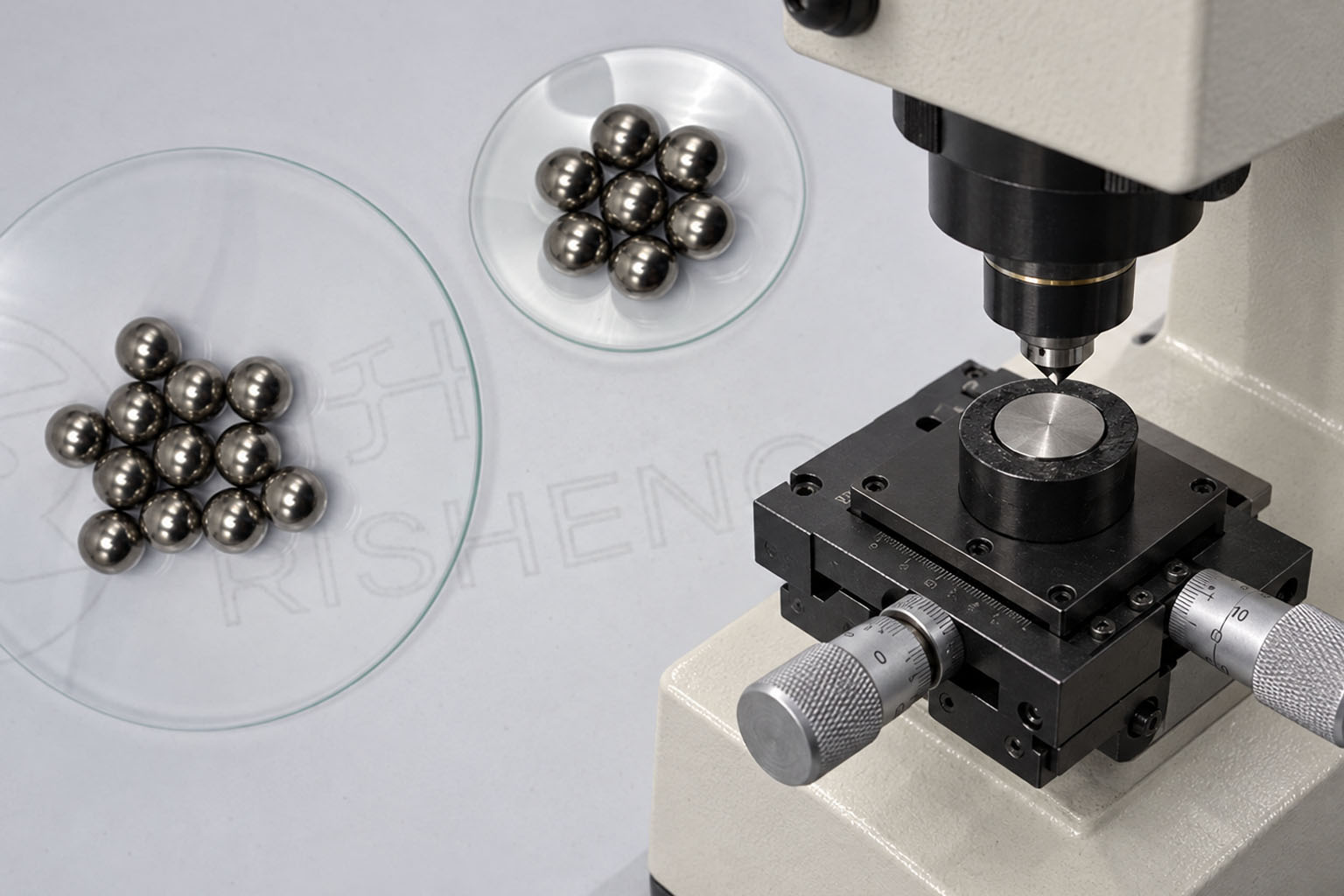
Through-hardened AISI 1085 steel balls becomes a candidate when repeated loading leaves permanent marks on the balls or when the existing material does not meet the required wear performance.
Its high carbon content supports a harder structure extending beneath the surface. However, a high surface reading alone does not demonstrate successful through hardening, particularly as ball diameter increases.
Before changing material, examine the mating components. If the support balls have already marked or deformed the bearing cup, replacing only the main ball leaves a damaged contact path in service.
An AISI 1085 high carbon steel ball may improve one part of the assembly, but the completed unit still needs to meet its starting-force, running-resistance and durability requirements. Its load rating cannot be increased simply because the replacement ball has a higher HRC value.
The carbon content specified here for AISI 1085 is 0.80–0.93%. Other high-carbon steel grades have their own composition limits and should be identified separately.
No. AISI 1085 may provide greater resistance to indentation when properly hardened, while case-hardened AISI 1015 may satisfy the application at an appropriate cost. Selection depends on the required hardness profile, contact conditions and assembled-unit performance.
No. Hardness alone does not define unit capacity. Load-ball diameter, support-ball arrangement, bearing cup, housing, mounting and operating conditions all contribute.
They may, but this should be a design decision. Their contact geometry and dimensional requirements differ, so each position should have its own specification.
Confirm dimensions, clearance, heat-treatment requirements, mating-surface condition and loaded operation. Replacing the material should be followed by assembly validation rather than assuming the original load rating has increased.


