
Views: 0 Author: Site Editor Publish Time: 2026-07-08 Origin: Site


Selecting the right carbon steel balls for your project is about balancing performance, longevity, and budget. For engineers and purchasing managers, the decision usually comes down to one fundamental variable: carbon content.
Low carbon steel balls (also called mild steel balls) and high carbon steel balls look identical to the naked eye — but their internal structures, mechanical properties, heat treatment methods, and price points are drastically different. Specify the wrong one, and you either overpay for performance you don't need, or watch balls deform and fail in the field.
The Quick Answer
Low carbon steel balls, such as AISI 1010 and AISI 1015, are supplied in soft-annealed or case-hardened conditions. Case-hardened balls typically provide a surface hardness of HRC 55–60 over a tougher, more ductile core, making them suitable for casters, drawer slides, hardware, welding and forming applications.
High carbon steel balls, such as AISI 1085, are normally through hardened to approximately HRC 60–66. Their more uniform hardness provides better wear and deformation resistance for heavy-duty casters, conveyors and general mechanical assemblies.
For high-speed precision bearings and applications requiring long rolling-contact fatigue life, AISI 52100 chrome bearing steel balls are usually more suitable than plain high carbon steel balls.
Low carbon steel balls (0.08%–0.25% C) cannot be hardened all the way through. Instead, they are supplied as case hardened steel balls (carburized): a hard outer shell (~0.5–1 mm deep) is created over a soft, ductile core. They can also be supplied soft (unhardened) for forming and welding applications.
High carbon steel balls (0.60%–1.10% C) are supplied as through hardened steel balls: quenched and tempered so the ball is uniformly hard from surface to core, reaching HRC 60–66.
| Feature | Low Carbon Steel Balls | High Carbon Steel Balls |
| Common grades | AISI 1010, AISI 1015, S10C | AISI 1065, AISI 1070, AISI 1085 |
| Typical carbon content | Approximately 0.08%–0.18% | AISI 1085: approximately 0.80%–0.93% |
| Supply condition | Soft annealed or case hardened | Normally through hardened |
| Typical hardness | Soft: HRB range; case-hardened surface: HRC 55–60 | Approximately HRC 60–66 after heat treatment |
| Hardness structure | Hard surface with a tougher, ductile core | More uniform hardness from surface to core |
| Weldability | Good in soft condition | Generally not recommended for welding |
| Wear resistance | Suitable for light- to moderate-duty use | Better for repeated wear and higher contact loads |
| Impact resistance | Good due to the tougher core | Lower ductility than low carbon steel |
| Corrosion resistance | Low; oil, plating or coating may be required | Low; oil, plating or coating may be required |
| Applications | Drawer slides, standard casters, locks, toys, welded parts | Heavy-duty casters, conveyors, machinery and wear-loaded components |
| Main buying advantage | Lower cost, toughness and formability | Higher hardness, wear resistance and load capability |
carbon balls selected when the ball must be:
Welded into an assembly;
Riveted or staked in place;
Pressed or intentionally deformed;
Drilled, machined or further processed;
Used as a sealing plug;
Formed into a custom metal component.
When better surface wear resistance is required, AISI 1010 or AISI 1015 steel balls can be carburized.
During carburizing, carbon is introduced into the outer surface before quenching and tempering. The resulting case-hardened steel ball has:
A hard outer surface of approximately HRC 55–60;
An effective hardened layer of approximately 0.5–1.0 mm;
A tougher and more ductile low carbon core;
Better surface wear resistance than a soft ball;
Better impact tolerance than a uniformly hardened ball.
The case depth must be selected according to ball diameter and contact stress. A hardened layer that is suitable for a small ball may not provide sufficient support for a larger ball exposed to a higher mechanical load.
For detailed product information, view RISHENG low carbon steel balls.
The higher carbon content allows the steel to form a hardened martensitic structure through a greater portion of the ball during quenching. After tempering, AISI 1085 steel balls can normally reach approximately HRC 60–66.
Unlike a case-hardened low carbon steel ball, a through-hardened AISI 1085 steel ball does not rely on a thin hardened surface over a soft core.
Its more uniform hardness provides:
Better resistance to repeated surface wear;
Greater resistance to permanent indentation;
Better dimensional stability under sustained contact;
More support beneath the contact surface;
Longer service life in suitable mechanical applications.
However, high hardness also reduces ductility. Through-hardened high carbon steel balls are less suitable for welding, riveting or applications requiring intentional deformation.
AISI 1085 high carbon steel balls may be considered for:
Heavy-duty casters;
Agricultural machinery;
Conveyor components;
Ball-transfer units;
Bicycle and mechanical components;
Semi-precision rolling mechanisms;
Industrial parts exposed to repeated wear.
For high-speed precision bearings, motors and linear-motion systems requiring long rolling-contact fatigue life, AISI 52100 chromium bearing steel is normally more suitable than plain AISI 1085 high carbon steel.
For detailed specifications, view RISHENG high carbon steel balls.
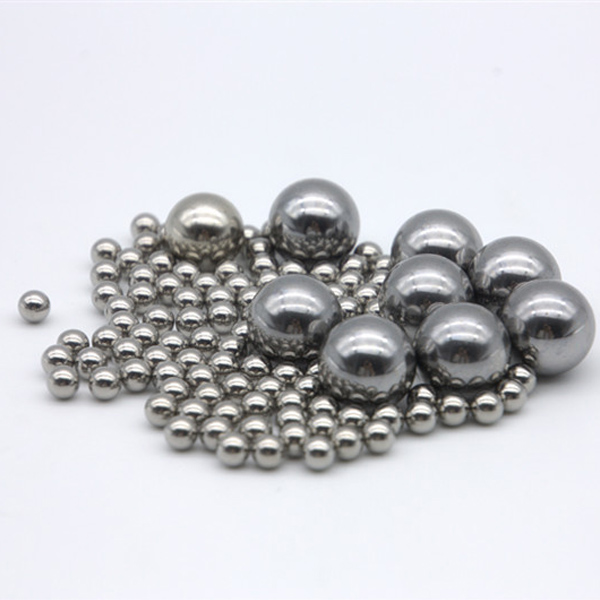
| Element | AISI 1010 | AISI 1015 | AISI 1085 |
| Carbon (C) | 0.08%–0.13% | 0.13%–0.18% | 0.80%–0.93% |
| Manganese (Mn) | 0.30%–0.60% | 0.30%–0.60% | 0.70%–1.00% |
| Phosphorus (P) | 0.040% maximum | 0.040% maximum | 0.040% maximum |
| Sulfur (S) | 0.050% maximum | 0.050% maximum | 0.050% maximum |
| Iron (Fe) | Balance | Balance | Balance |
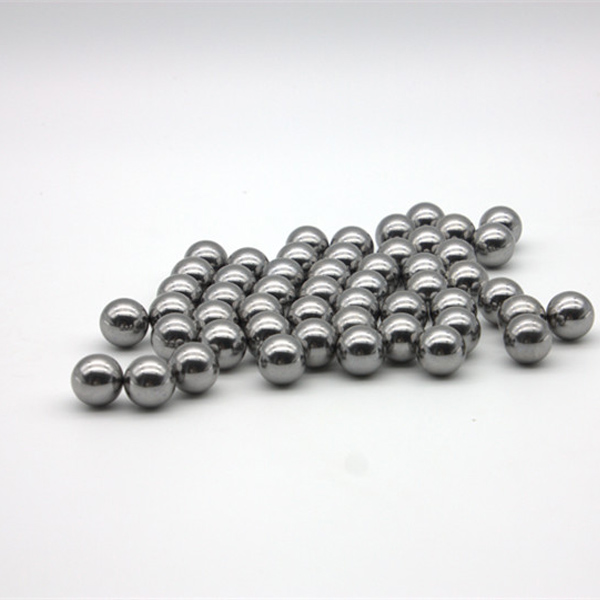
As a carbon steel ball factory, RISHENG controls material inspection, cold heading, flashing, grinding, heat treatment, finishing, cleaning and sorting according to the confirmed production specification.
AISI 1010, AISI 1015 or equivalent low carbon steel wire is checked for grade, chemical composition, diameter and batch traceability.
The wire is cut and cold headed into spherical blanks. A thin flash ring remains around the equator of each blank.
The flash is removed, and the ball blanks are ground to improve roundness and prepare a controlled finishing allowance.
The balls are heated in a controlled carbon-rich atmosphere. Carbon diffuses into the outer layer, producing a higher-carbon surface around the low-carbon core.
Quenching hardens the carburized surface. Tempering reduces excessive brittleness and stabilizes the required hardness.
The heat-treated balls are ground and lapped to control diameter, spherical form, lot diameter variation and surface finish.
Finished balls are cleaned and inspected for diameter, roundness, surface hardness, case depth and surface condition before sorting and packaging.
Soft low carbon steel balls can be supplied without carburizing when welding, riveting, stamping or further forming is required.
AISI 1085 high carbon steel wire is checked for material grade, carbon content, wire diameter and batch traceability.
The wire is formed into ball blanks, and the equatorial flash is removed.
The ball blanks are ground to improve geometry and maintain a uniform allowance for the hardened finishing process.
The balls are heated to the required austenitizing temperature, typically within the confirmed heat-treatment range, and then oil quenched.
The higher carbon content allows a hardened structure to form through a greater portion of the ball.
Tempering reduces quenching stress and adjusts the final balance between hardness and toughness.
The hardened balls are finished to the required diameter, roundness, lot consistency and surface condition.
Inspection may include hardness, diameter variation, spherical deviation, surface finish and visual surface condition.
The main difference is carbon content and the resulting hardness profile. AISI 1010/1015 low carbon steel balls may be supplied soft or case hardened, while AISI 1085 high carbon steel balls are normally through hardened.
Not under normal quench-and-temper conditions. AISI 1010 and AISI 1015 do not contain enough carbon to achieve high hardness through the complete cross-section. They are normally carburized when a hard surface is required.
The surface hardness may be relatively similar after carburizing, but the internal structure is different. A case-hardened low carbon steel ball has a hard surface over a tougher core, while a through-hardened AISI 1085 ball has more uniform hardness.
RISHENG case-hardened low carbon steel balls typically reach approximately HRC 55–60 at the surface. Soft balls are typically approximately HRB 60–75.
After suitable quenching and tempering, AISI 1085 high carbon steel balls can typically reach approximately HRC 60–66.
Effective case depth determines how much hardened material supports the contact surface. If the case is too shallow for the applied load, the hardened surface may deform into the softer core.
Through-hardened high carbon steel balls are generally not recommended for ordinary welding because their higher carbon content increases cracking risk. Soft low carbon steel balls are normally more suitable for welding and forming.
No. AISI 1085 is a plain high carbon steel. AISI 52100 is a high-carbon chromium bearing steel designed for wear resistance and rolling-contact fatigue performance.


